The “Mustard Trap” Doughnuts (Sufganiyot)
I’m certain you didn’t arrive at this recipe after a Google search for “mustard doughnut recipe.”
Unless you are a descendant of the Surasky family, I doubt any sane person would fill their doughnuts with mustard. Well, okay—not all of them. Just one.
But it’s the one hidden inside the pile—a single, lonely doughnut that will sow terror and dread, forcing people to start thinking about “Game Theory” and developing strategies on the best time to grab a doughnut: do you go early to increase your odds before the mustard one is found, or do you grab one as fast as possible before they all run out?
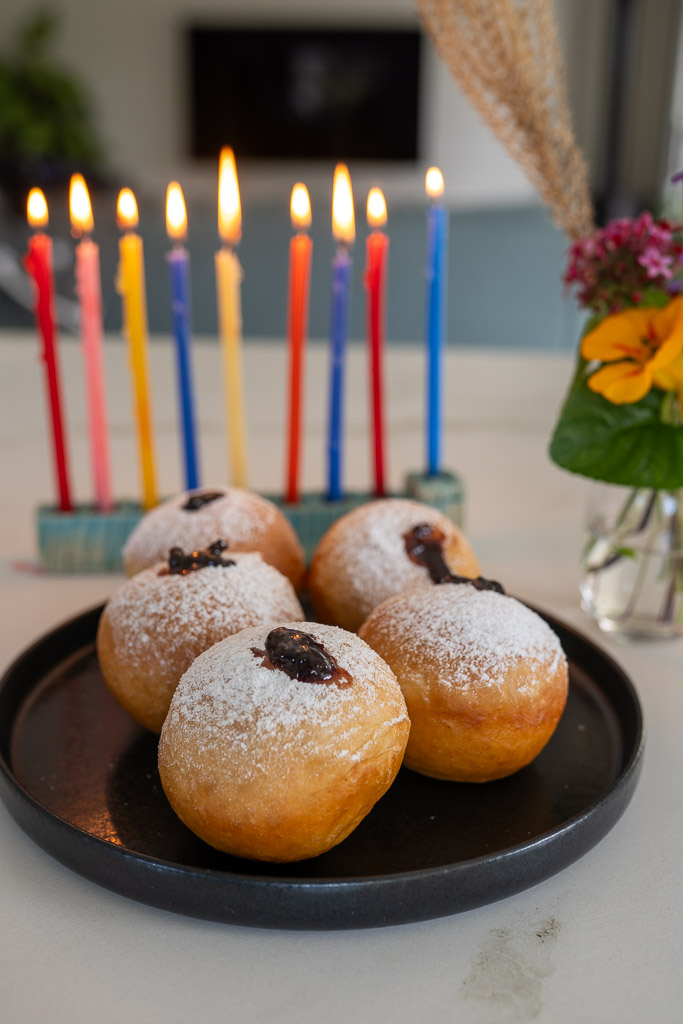
Before I get ahead of myself, I’ll just mention that in my grandmother’s house, there was a family tradition of making one mustard doughnut hidden among the rest. To preserve that tradition, I make one mustard doughnut in memory of my grandmother.
This week, I received a very, very moving email from my father’s cousin. She shared her experience of lighting candles and eating doughnuts as a child at my grandparents’ house:
“This year the ending changed… things change…
Since our childhood, Hanukkah was a holiday of gathering and joy. Every evening, we played the game of ‘Groyse Loyse’ (The Grand Prize) — a card game where every child earned their Hanukkah gelt with dignity. And to finish: candle lighting, singing, and doughnuts — homemade, of course.
Family tradition dictated that one doughnut was filled with mustard — a doughnut that created tension until someone ‘won’ it. One time, there was no clear winner of the mustard doughnut. My aunt stood there, arms crossed over her chest, scanning each child’s face with a searching look.
When her gaze landed on my brother, his cheeks were puffed out and red. My aunt’s stare pierced his cheeks until they ‘burst,’ and we, of course, burst into laughter…
We continued the doughnut tradition ourselves. Our children, who are now grown, remember it with a smile, and even today, our friends are still a little afraid…”
So, if you were looking for a mustard doughnut recipe—or just a really good doughnut recipe—you’ve come to the right place.
Three Rules for Doughnut Success
Before the recipe, here are three essential principles for success:
1. How long should you knead the dough?
More than the recipe itself, it is crucial to knead the dough long enough to develop the gluten. Well-developed gluten holds the “structure” of the doughnut. it traps more CO2 bubbles produced by the yeast, giving you a lighter doughnut that floats in the oil rather than sinking.
2. Proofing the Dough
Hand-in-hand with quality kneading, you must proof the dough properly. Unless you live in Australia where Hanukkah falls in summer, proofing dough in the Israeli winter takes time. Remember—if the dough hasn’t risen enough, three things will happen:
- The doughnut will be dense.
- The doughnut will be heavy for its size, causing it to sink in the pot and absorb more oil.
- The Grinch will steal Christmas.
The “Working Person’s” Solution: If you don’t have time to prep after work, just deal with it! Or, make the dough in the morning, let it do its first rise in the fridge, and then do the second rise in the afternoon.
3. How to Fry
There are no shortcuts here. Let’s start by saying there is no such thing as “baked doughnuts.” There are baked doughnuts, but the correct name for them is “rolls.”
Fry at 170°C–175°C (340°F–350°F). Use a deep fryer with temperature control or a thermometer.
Pro Tip: Don’t put all your oil in the pot at once. Keep a little aside; if the temperature rises too fast, add a bit of room-temperature oil to bring it back down.
The Secret to Airy (Not Greasy) Doughnuts
Many think oil “soaks into” the dough the moment it hits the pot, but the science is different: during frying, water inside the dough turns to steam and escapes under pressure (those are the bubbles you see). As long as steam is escaping, oil cannot get in. Absorption happens when the temperature drops or the internal pressure weakens.
Don’t skip the alcohol (Brandy/Vodka/Arak). Alcohol boils at a lower temperature than water. This means it turns to steam faster, creating that “shield” that prevents oil from penetrating the dough. It’s for physics, not flavor!
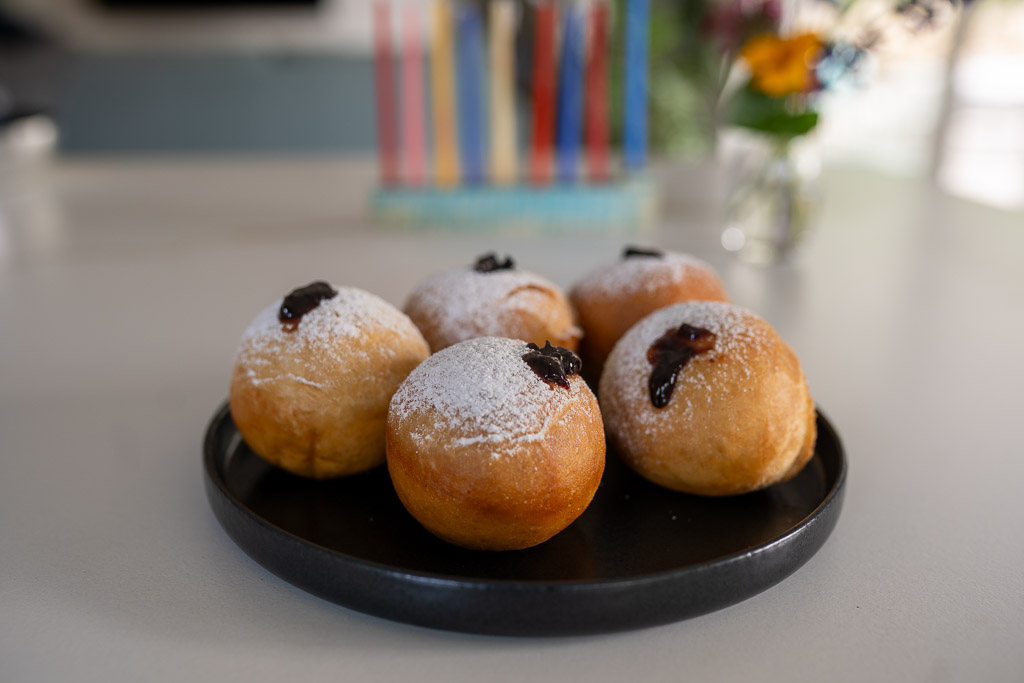
The “Mustard Trap” Doughnuts (Sufganiyot)
Ingredients
Method
- The Dough: Place all ingredients in a mixer bowl, starting with the liquids. Knead for at least 9 minutes until the dough is uniform, smooth, and soft.
- First Rise: Shape into a ball and place in a bowl until nearly doubled in volume.
- Shaping: Divide the dough into pieces weighing 60-70g each (keep them uniform for even frying). Roll into smooth balls and place each on a small square of parchment paper.
- Second Rise: Cover with lightly oiled plastic wrap (to prevent sticking) and then a towel.
- Frying: Heat 2 liters of oil to 170°C–175°C. Carefully place the doughnuts into the oil with the parchment paper. Use tongs to pull the paper out once it releases.
- Finishing: Fry for about 2 minutes per side and transfer to a cooling rack.
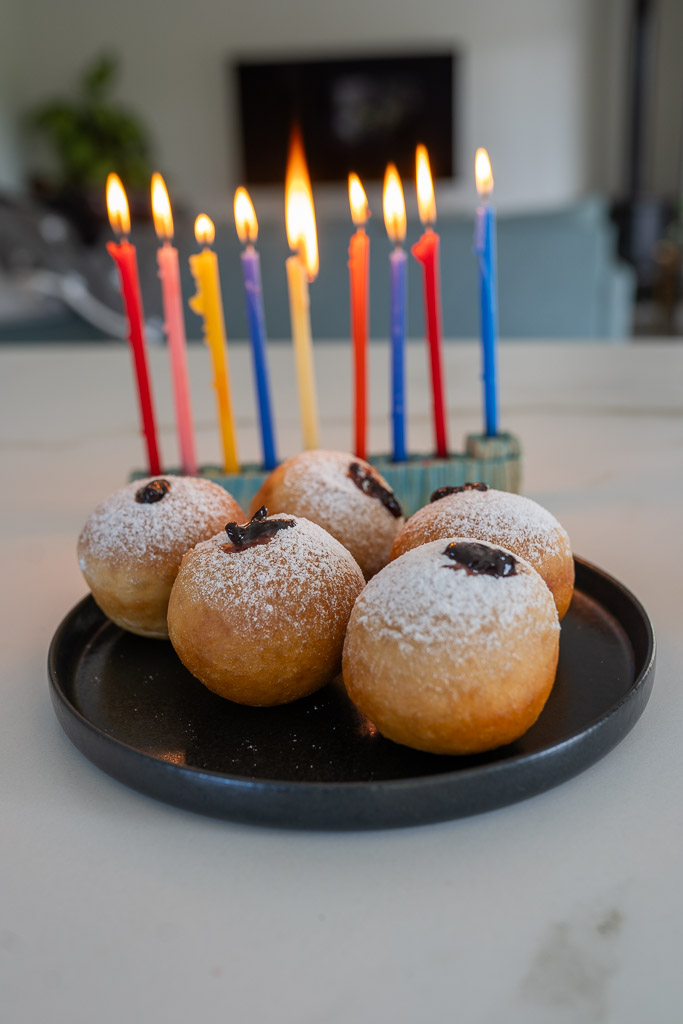
- The Trap: Fill one doughnut with mustard and disguise it with a little dab of jam. Dust everything with powdered sugar before serving.
Tried this recipe?
Let us know how it was!Discover more from Tals Cooking
Subscribe to get the latest posts sent to your email.