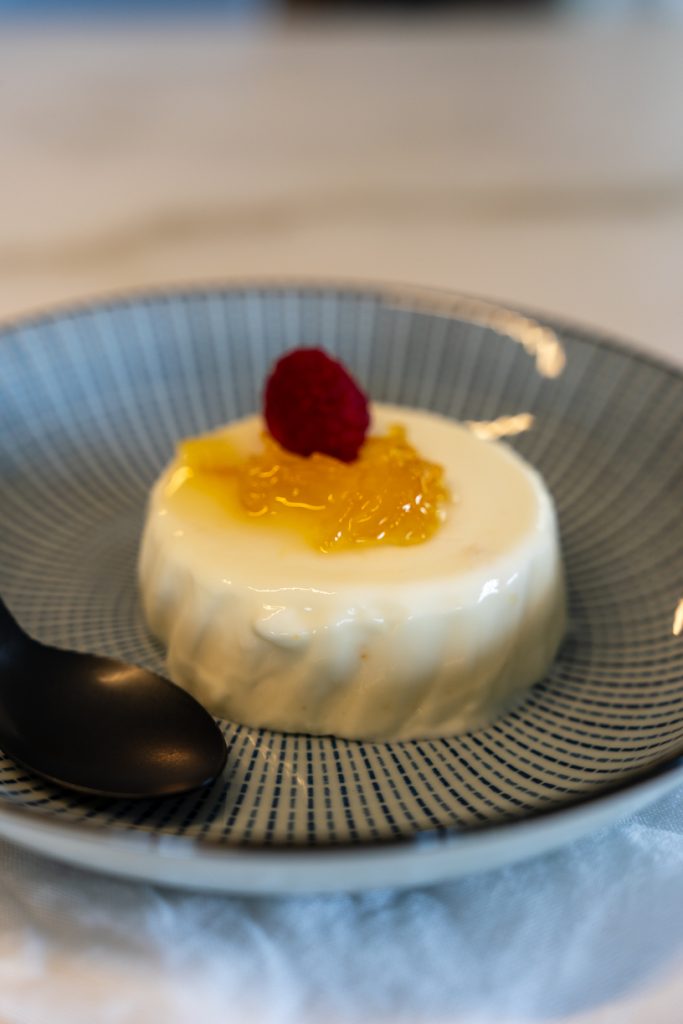
Panna Cotta – Italian for “cooked cream.” Is there any dessert whose name describes its essence more accurately? It is one of the easiest desserts to prepare, yet it remains one of the most impressive and elegant dishes you can set on a table.
My first encounter with Panna Cotta was about 26 years ago (back then she was my girlfriend; today she is my wife). Her mother’s “secret recipe” turned out to be a store-bought instant powder with industrial caramel syrup. But even then, a realization took root: when you do it right, using real ingredients, it’s in a whole different league.
This week, I returned from a business trip to Japan. While in Tokyo, I sat down for lunch and ordered a Yuzu and Honey Soda. It was so incredibly delicious and refreshing that I didn’t even finish my meal before I went and immediately bought two jars of the local yuzu marmalade to bring home.
Combining that Japanese yuzu marmalade with a classic Italian Panna Cotta turned out to be the perfect way to bring a piece of that trip back into my kitchen.
Wait! Don’t panic.
I realize you might not have yuzu marmalade sitting in your pantry right now. That’s okay. You can make a classic Panna Cotta with a vanilla bean, or create a fruit puree to blend with the cream. Try blending lychee, pineapple, strawberries, melon, or any other fleshy fruit.
What is Yuzu?
If a lemon and a mandarin decided to start a band, Yuzu would be the charismatic lead singer.
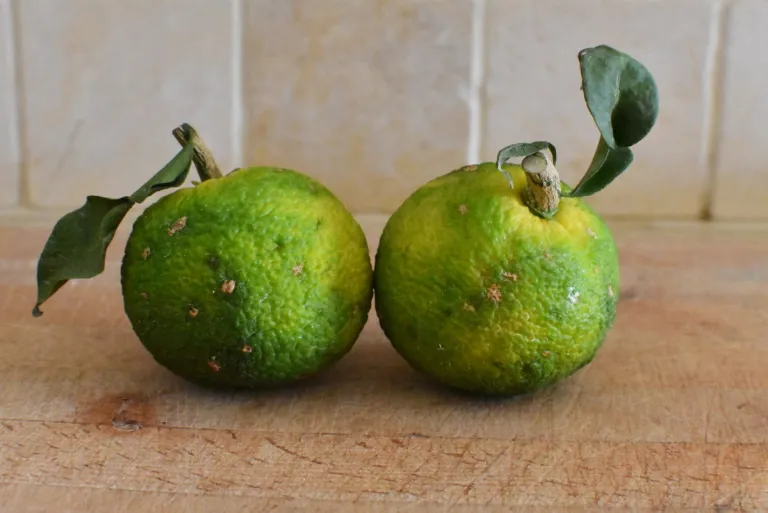
Yuzu is a citrus fruit originating from East Asia (primarily Japan, Korea, and China). It looks a bit like a small, wrinkled yellow lemon, but don’t let its appearance fool you—inside lies a whole world of flavor.
What makes it special?
- The Flavor: It is tart like a lemon, but with the delicate bitterness of a grapefruit and a floral sweetness reminiscent of a mandarin.
- The Aroma: This is the real magic. Yuzu has an intoxicating, distinct scent. Just a few drops of juice or a bit of zest is enough to elevate an entire dish.
- In the Kitchen: In Japan, it’s used for everything—from sauces (like the famous Ponzu) to seasoning raw fish, desserts, jams, and even tea.
If you happen to have friends with a massive yuzu tree, you’ve hit the jackpot. Treasure those friends—and don’t let them go!

How to Make the Perfect Panna Cotta
Panna Cotta is the simplest dessert in the world, provided you follow two key rules:
- Do Not Boil the Cream: Bring the cream just to the brink of a boil (about 80-85°C). Heavy cream is an emulsion of fat and water. If it boils too hard, the structure can break, resulting in a less velvety texture or a thin oily layer on top.
- Use the Right Amount of Gelatin: Too much gelatin makes it rubbery; too little leaves it runny. To get the best results, you must “bloom” the gelatin by soaking it in water for 10 minutes first. This ensures it dissolves evenly without lumps.
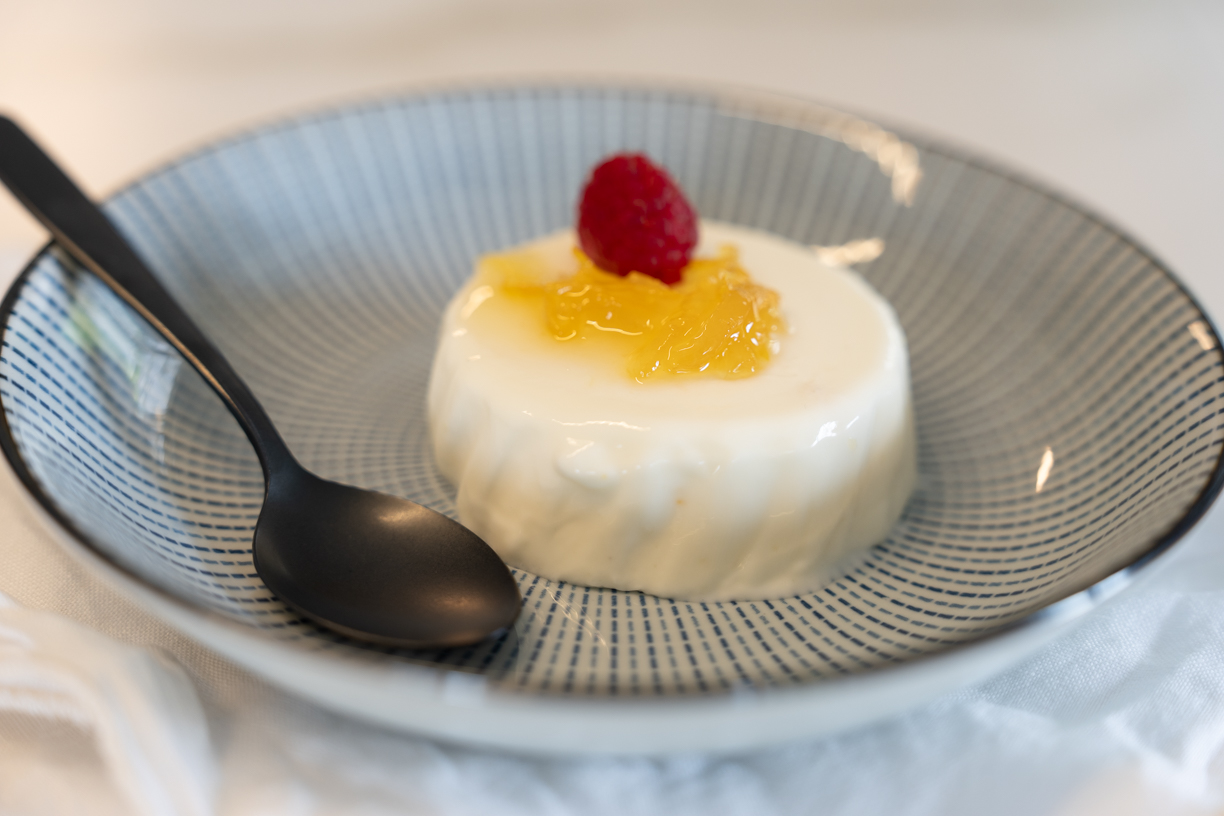
Yuzu Panna Cotta
Tokyo-Inspired Yuzu Panna Cotta
A silky, elegant Italian classic with a vibrant Japanese citrus twist.Ingredients
Method
- Bloom the gelatin: Mix the gelatin and ¼ cup water thoroughly. Wait about 10 minutes until all the water is absorbed.
- Heat the base: In a small pot, combine the heavy cream, milk, and sugar. Bring to a simmer (80-85°C) while stirring, but do not let it reach a rolling boil.
- Melt the gelatin: Melt the bloomed gelatin in the microwave in 10-second pulses until liquid (be careful not to burn it).
- Combine: Stir the liquid gelatin into the hot cream mixture. Add the yuzu marmalade (or fruit puree) and whisk well.
- Set: Pour the mixture into 12 individual ramekins or one large central dish.
- Chill: Refrigerate for at least 12 hours to set completely.
Nutrition
Notes
Tried this recipe?
Let us know how it was!Discover more from Tals Cooking
Subscribe to get the latest posts sent to your email.