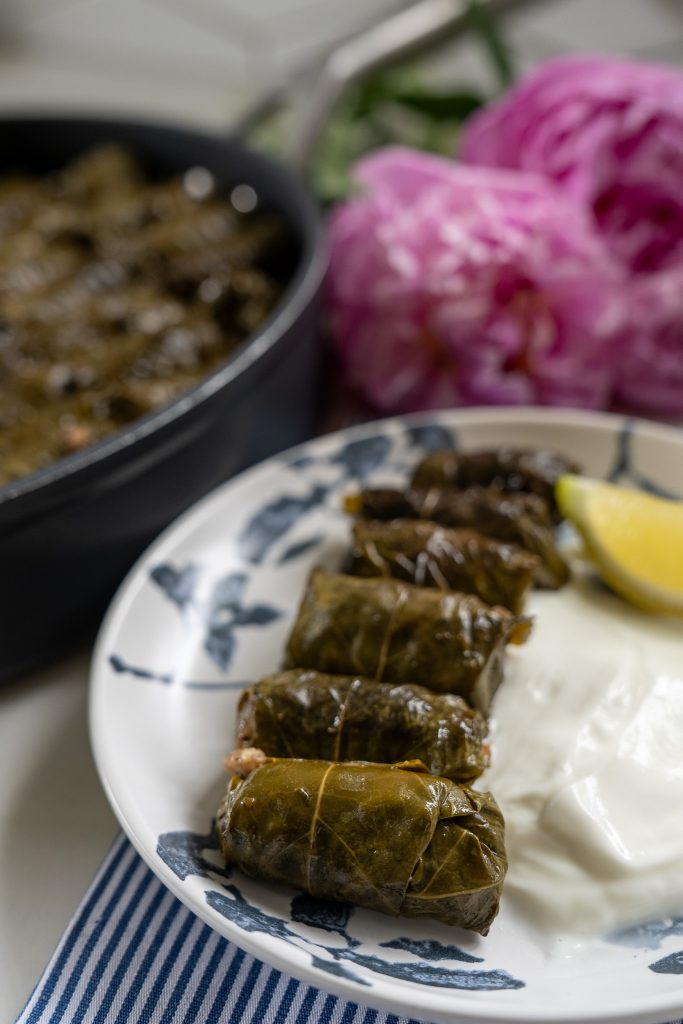
Let’s be honest—I’m not against canned food in principle. When an ingredient isn’t in season, a high-quality can can be a lifesaver. But there’s a limit. Just like canned mushrooms or gefilte fish, those vegetarian stuffed grape leaves floating in oil inside a tin have almost nothing to do with the real thing. Aside from the name and the color, they belong to completely different worlds.
The Unexpected Encounter
This week, in the middle of a cleaning day, a knock at the door startled me. I ran down expecting a delivery, but instead, it was my neighbor from the nearby Bedouin village. It turned out she remembered the grapevines sprawling across our yard and asked for permission to pick some leaves. I saw an opportunity: “No problem,” I replied, “on one condition—you teach me how to make vegetarian grape leaves that will make everyone ask for seconds.”
The Secret to the Perfect Roll
The deal was struck, and she headed to the yard. I didn’t get a neat recipe with grams and measurements, but I did get a private lesson in rolling technique and her kitchen philosophy: “A little of this, a little of that, and above all—lots of patience.”
Since it’s exactly the season when markets are filled with fresh green leaves, it’s the perfect time to learn how to stuff them yourself at home. True, it takes some time, but the taste of fresh, handmade grape leaves is simply incomparable to the industrial version.
The Rolling Technique
If you’ve ever made blintzes or spring rolls, you’re halfway there.
- Place the grape leaf on a work surface with the rough side facing up. (One side is smooth, and the other has prominent veins—you want the smooth side on the outside when finished).
- Place about 2 teaspoons of the filling on the bottom third of the leaf.
- Fold the sides (left and right) inward to “lock” the rice in.
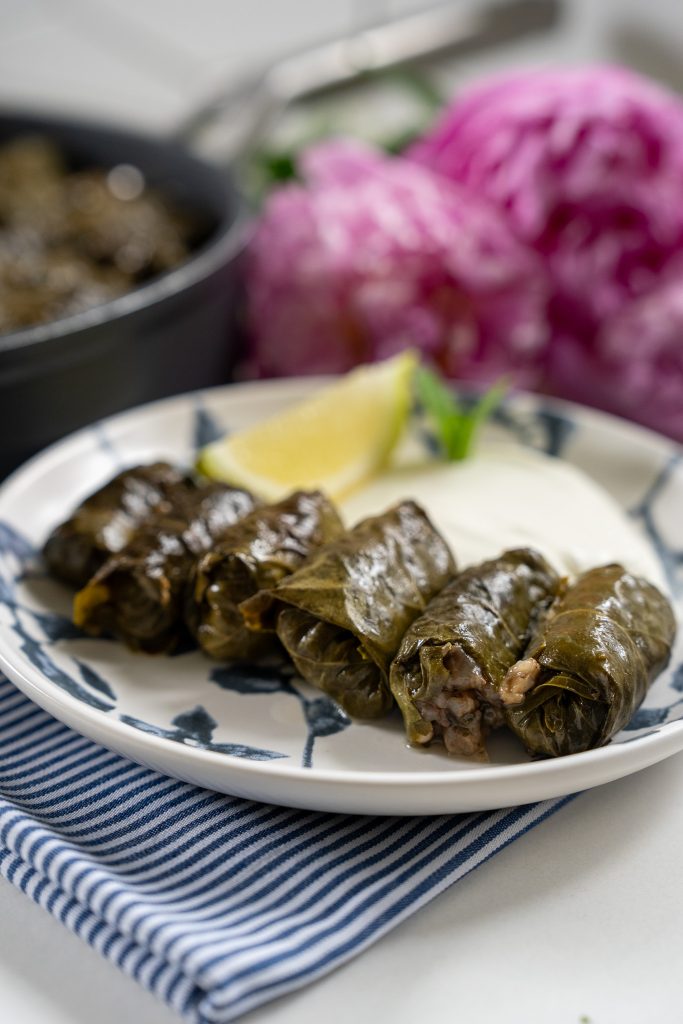
- Roll the leaf upward tightly. By the fifth one, you’ll feel like a pro!
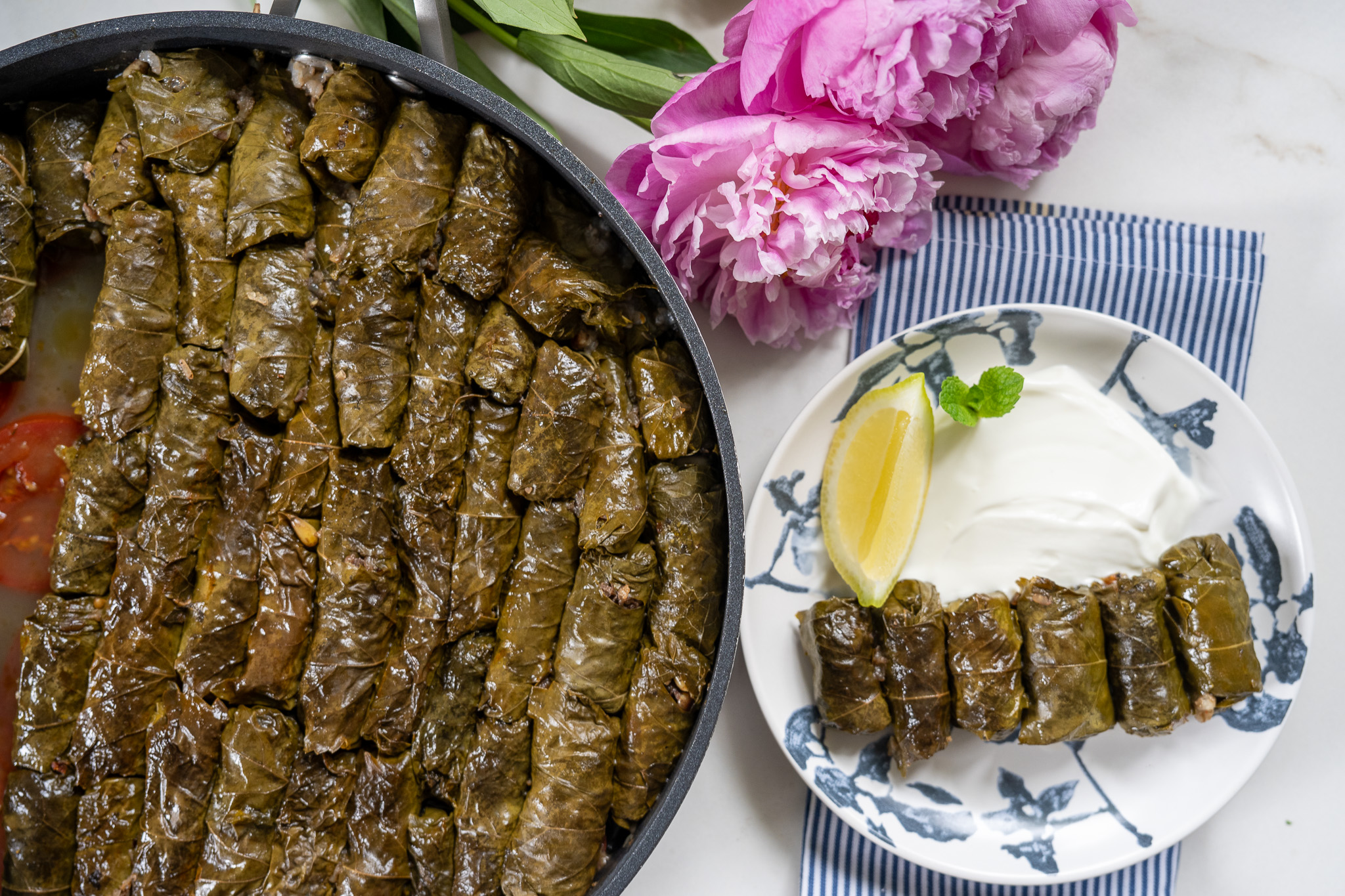
Vegetarian Stuffed Grape Leaves (Warak Enab)
Ingredients
Method
- Fresh leaves: Wash thoroughly. Place in a bowl and pour boiling water over them. Let them soak until the water cools down.
- Jarred/Canned leaves: Rinse thoroughly under cold water to remove excess brine.
- Wash the rice well and soak it in cold water for at least one hour. Drain.
- Sauté: Heat olive oil in a pan and sauté the chopped onion until it begins to soften.
- Mix the Filling: In a bowl, combine the sautéed onion, soaked rice, herbs, salt, sumac, dried mint, pomegranate molasses, and toasted pine nuts. Mix well.
- Tip: Since you can’t adjust the seasoning once they are cooking, taste a tiny bit of the raw filling (sucking the juices) to ensure the salt and spice levels are to your liking.
- Prepare the Pot: Pour ¼ cup of olive oil into a wide, flat pot (a sauté pan works well). Arrange the tomato slices in a single layer across the bottom. This prevents the leaves from sticking and adds flavor.
- Stuff and Roll: Place a leaf rough-side up. Put 2 teaspoons of filling near the stem end. Fold the sides in and roll tightly.
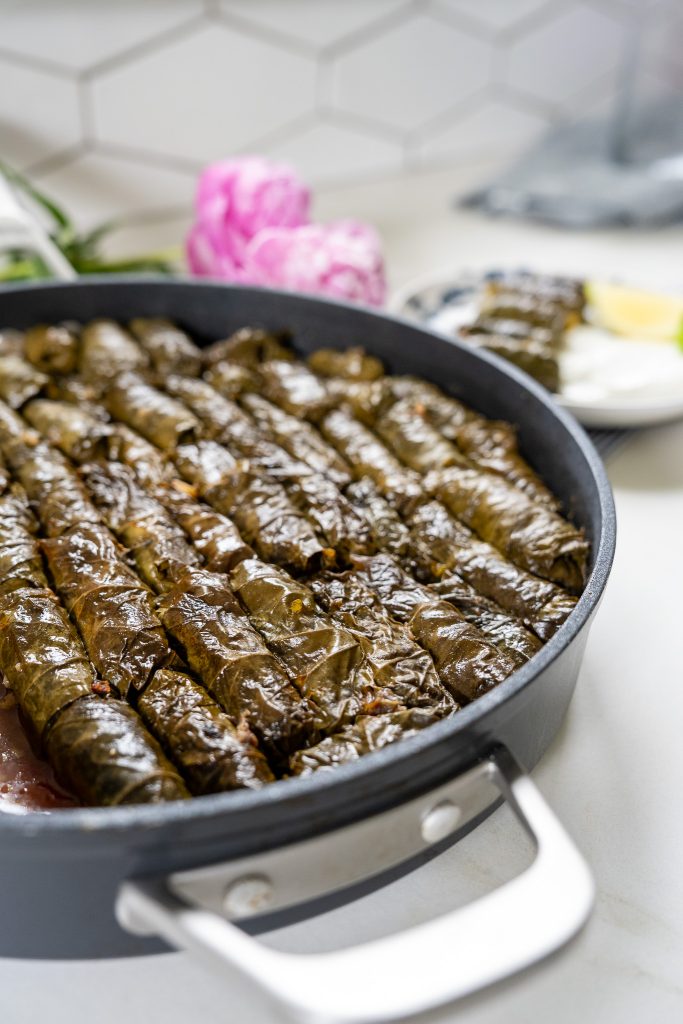
- Pack the Pot: Arrange the rolled leaves in the pot. They should be packed very tightly together to prevent them from opening during cooking.
- Cook: Mix the water (or broth), lemon juice, olive oil, and salt. Pour the mixture over the grape leaves.
- Simmer: Cover the pot and cook on medium-low heat for about 3 hours, or until the leaves are tender and the rice is fully cooked.
Notes
Tried this recipe?
Let us know how it was!Discover more from Tals Cooking
Subscribe to get the latest posts sent to your email.